




THE SUPPORTERS CIRCLE
All the benefits of The Extraordinary Form, plus:
Custom giving level
This is more than a membership—it’s a commitment to advancing the mission and helping shape its future.
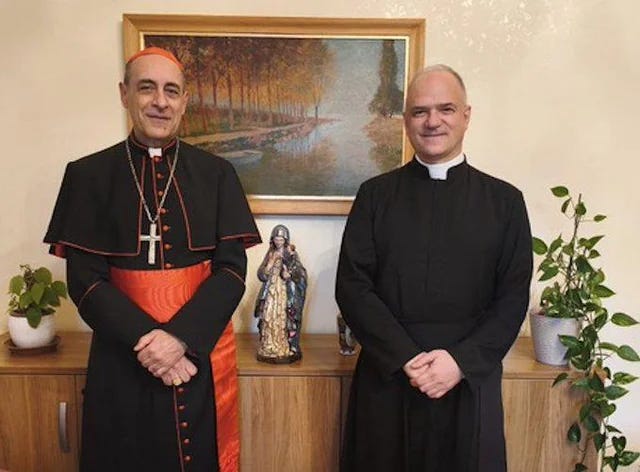
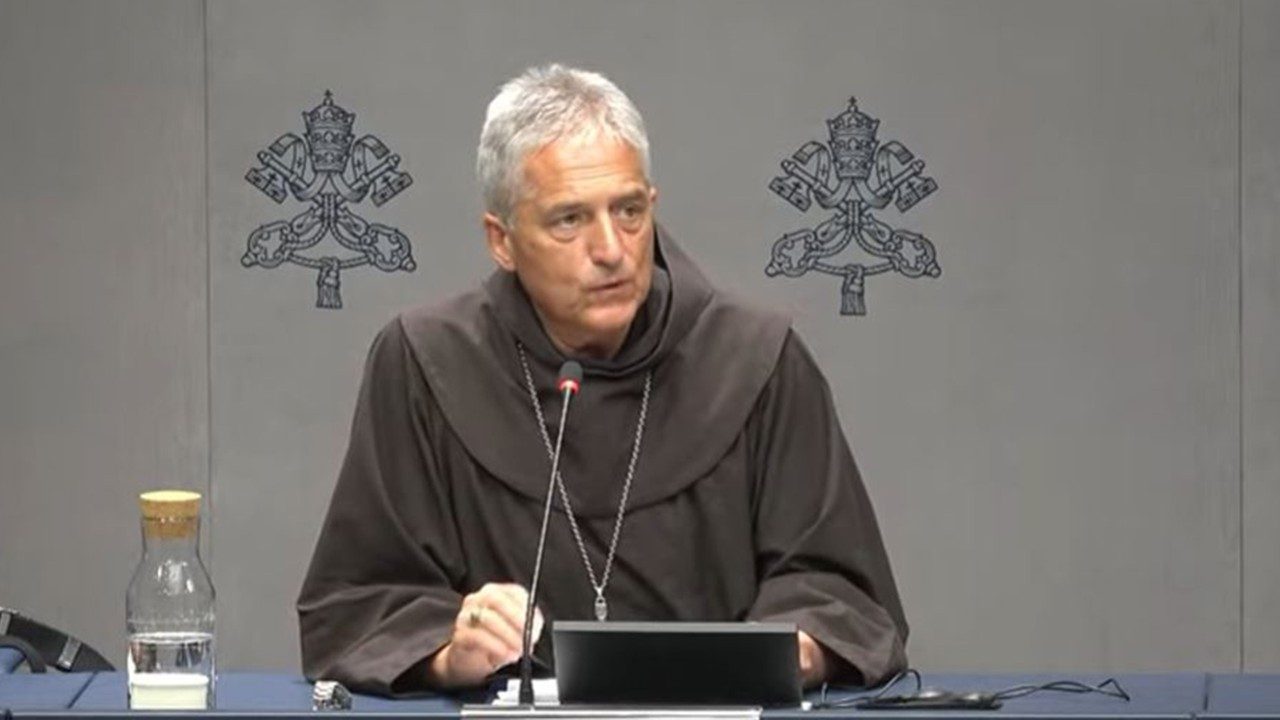
Serious questions surrounding the Vatican’s SSPX decree suggest a deeper problem within the Roman Curia, one that Pope Leo XIV may soon have to confront.
Just as predicted, when the Holy See announced the excommunication of the bishops consecrated by the Society of Saint Pius X, the headlines were horrible. Attention immediately centred upon the gravity of the penalty and the implications for the Society’s future. Supporters and critics alike hurried to debate Archbishop Marcel Lefebvre’s legacy, the necessity claimed by the Society and the consequences for traditional Catholics throughout the world.
Almost unnoticed, however, another conversation began among canon lawyers.
Within hours of publication, experienced canonists were asking not whether the Holy See possessed the authority to impose penalties, for no serious Catholic disputes that principle, but whether the documents published by the Dicastery for the Doctrine of the Faith had actually achieved what many commentators assumed they had achieved. The distinction is not a technicality. It goes to the heart of whether the Church’s supreme doctrinal authority has exercised its judicial function with the care, precision and legal coherence that Catholics ought to expect.
One analysis, published by InfoVaticana, observed that the explanatory note accompanying the decree appeared to attribute penal consequences to priests and lay faithful that were not themselves contained in the decree possessing juridical force. That distinction is far from insignificant. In canon law, an explanatory note is not itself a penal decree. It may explain. It may interpret. It may offer guidance. What it cannot ordinarily do is create new juridical effects merely by assertion.
An experienced canon lawyer with whom I discussed the documents reached a similar conclusion after an initial review. He noted that the explanatory note has no independent penal effect beyond the decree itself. He further observed that canonical penalties require individual imputability rather than the presumption of collective guilt. Finally, he questioned whether the faculties granted personally by Pope Francis permitting valid absolutions and valid marriages celebrated by priests of the Society could simply disappear through a curial document without explicit papal approval forma specifica. His conclusion was striking. In his judgement, the intervention appeared rushed and inadequate.
Perhaps these criticisms will ultimately prove mistaken. Rome may produce further clarification. Additional decrees may follow. Canonical arguments often develop over time and prudent observers should avoid reaching premature conclusions. Yet something more fundamental has already happened: The very fact that serious questions of this nature have arisen within hours of publication ought to concern every Catholic, regardless of his opinion of the Society of Saint Pius X. When the Church exercises one of her gravest disciplinary powers, precision should surely be an obligation? Justice requires clarity and authority demands coherence. The very credibility of ecclesiastical governance rests upon confidence that the law has been applied carefully rather than hastily.
Six months ago I argued that the Holy See faced a growing crisis of institutional credibility. The problem, I suggested, was no longer confined to controversial decisions or disputed theological emphases. Increasingly, confidence was being undermined by what appeared to be poor governance itself. Canonical inconsistencies, administrative confusion and a succession of interventions that required clarification or qualification were steadily eroding trust in the competence of those charged with governing the Church.
If the concerns now being raised about this latest decree possess substance, then they do not represent an isolated embarrassment, they constitute yet another sad example of the very pattern that I thought was becoming apparent back in January.
It is impossible to ignore the role played by Cardinal Víctor Manuel Fernández in this wider story. His tenure as Prefect of the Dicastery for the Doctrine of the Faith has repeatedly generated controversy, not simply because of the conclusions reached but because of the manner in which those conclusions have been expressed. The documents he releases have consistently required further explanation, not all of which has frankly been satisfactory. Public interventions have generated confusion rather than clarity. Distinctions that ought to have been carefully articulated have instead appeared opaque, inviting contradictory interpretations from bishops and theologians across the world. The present controversy risks reinforcing precisely that impression. Whatever one’s view of the SSPX, the Church deserves legislation that displays meticulous legal craftsmanship. Instead, respected canonists immediately found themselves debating whether the accompanying explanatory note possessed the legal effect that many assumed it carried.
This raises a broader question about the final years of Pope Francis’ pontificate. His programme of reform was accompanied by a noticeable pattern of appointments. Again and again, influential positions were entrusted to men whose principal qualification appeared to be their enthusiasm for implementing the Pope’s vision. Cardinal Mario Grech’s stewardship of the Synod on Synodality is perhaps the clearest example, but Cardinal Roche would be another obvious one as he was as publicly enthusiastic about Pope Benedict XVI’s re-introduction of the Traditional Latin Mass as he later was about its suppression. Loyalty to a programme is, of course, a legitimate consideration in any pontificate. Every pope is entitled to appoint collaborators who share his priorities. But loyalty is not itself a substitute for competence. Administrative excellence, theological precision and juridical rigour are not optional virtues within the Roman Curia. They are essential qualifications for those entrusted with the governance of the universal Church. When appointments are seem to very obviously prioritise ideological alignment above administrative ability, the result will inevitably be an erosion of confidence. Even those who support the policies themselves may begin to question the quality of their execution.
It is for this reason I feel that this present episode is disappointing for reasons extending beyond Cardinal Fernández himself. Many Catholics hoped that Pope Leo XIV’s election would mark much more than just a change of emphasis, we anticipated a renewal of institutional confidence. His own formation as a canon lawyer appeared especially encouraging. Here, surely, was a Pope uniquely equipped to recognise the importance of careful legal drafting and canonical precision. This was especially important given that Pope Francis criticised canonists as “doctors of the law” who apply rules without mercy, condemned canonists for becoming mere bureaucrats and reducing pastoral care to the mechanical application of norms.
It would be unfair to assume that every line of this DDF intervention passed personally beneath the eyes of Pope Leo. We do not know what documents were presented to him, what advice he received or precisely how this process unfolded. Yet the broader question cannot be avoided. If experienced canonists are publicly questioning the legal architecture of one of the most significant disciplinary interventions of recent years within hours of its publication, something has plainly gone wrong. Whether the failure lies in drafting, review or internal process, it reflects upon the machinery of governance itself.
This is precisely why, as we all know I am sure, personnel matters so much: Personnel are policy!
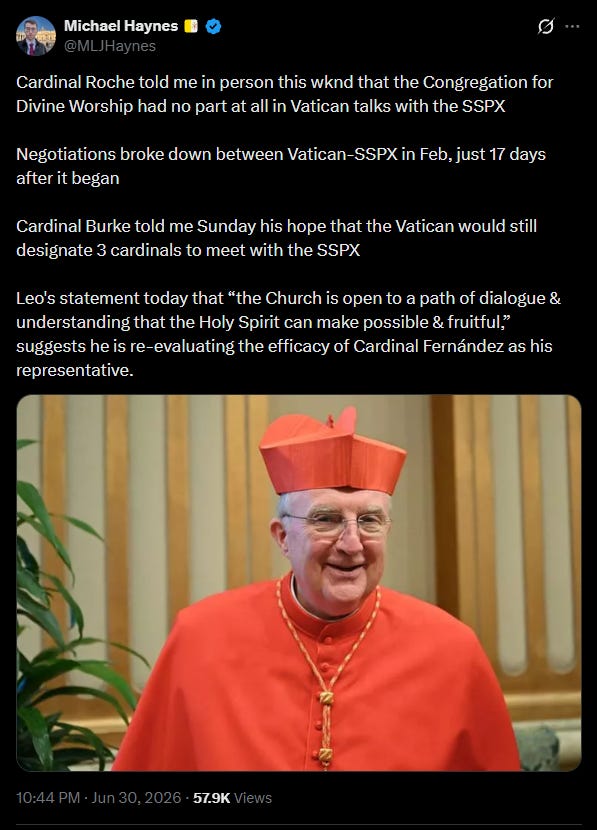
Every pope inherits the officials appointed by his predecessor and that continuity possesses real value because stability should not lightly be discarded. Nevertheless, continuity cannot become an end in itself and one might argue that the current prefects in a number of positions are doing anything but fostering stability, indeed, quite the opposite! The Church is not served by preserving appointments simply because they already exist, those entrusted with the highest offices of the Roman Curia must inspire confidence not merely in their orthodoxy or their loyalty but in their judgement, their competence and their mastery of the disciplines they administer. If the concerns now being expressed prove justified, Pope Leo XIV may eventually conclude that the time has come for more than a change of tone. He may conclude that genuine renewal requires new leadership within some of the Vatican’s most influential dicasteries. Some in Rome even seem to be hinting that this is what the Pope is thinking himself:
The question raised by this decree therefore extends far beyond the Society of Saint Pius X, it concerns the confidence with which Catholics may look to Rome itself. Of course, the authority of the Apostolic See has never rested upon administrative perfection. Popes and curial officials remain fallible men, but the authority of the Church is strengthened when her laws are carefully framed, consistently applied and transparently defended. For generations Catholics have looked to Rome as the place where difficult questions receive careful answers and where justice is exercised with patience, precision and wisdom. That reputation is one of the Holy See’s greatest treasures and it should be furiously guarded.
Perhaps the present controversy will soon be resolved through clarification or further canonical action. If so, that will be welcome, but the questions already raised should not simply disappear with the news cycle. They point towards something deeper: Institutions seldom lose credibility through a single dramatic collapse, more often they diminish gradually, through a succession of avoidable errors that slowly convince observers that excellence has given way to expediency.
That is precisely the danger confronting the Roman Curia today. The issue is no longer simply what decisions are made. Increasingly, it is whether Catholics retain confidence that those making them possess the competence to do so.