




THE SUPPORTERS CIRCLE
All the benefits of The Extraordinary Form, plus:
Custom giving level
This is more than a membership—it’s a commitment to advancing the mission and helping shape its future.
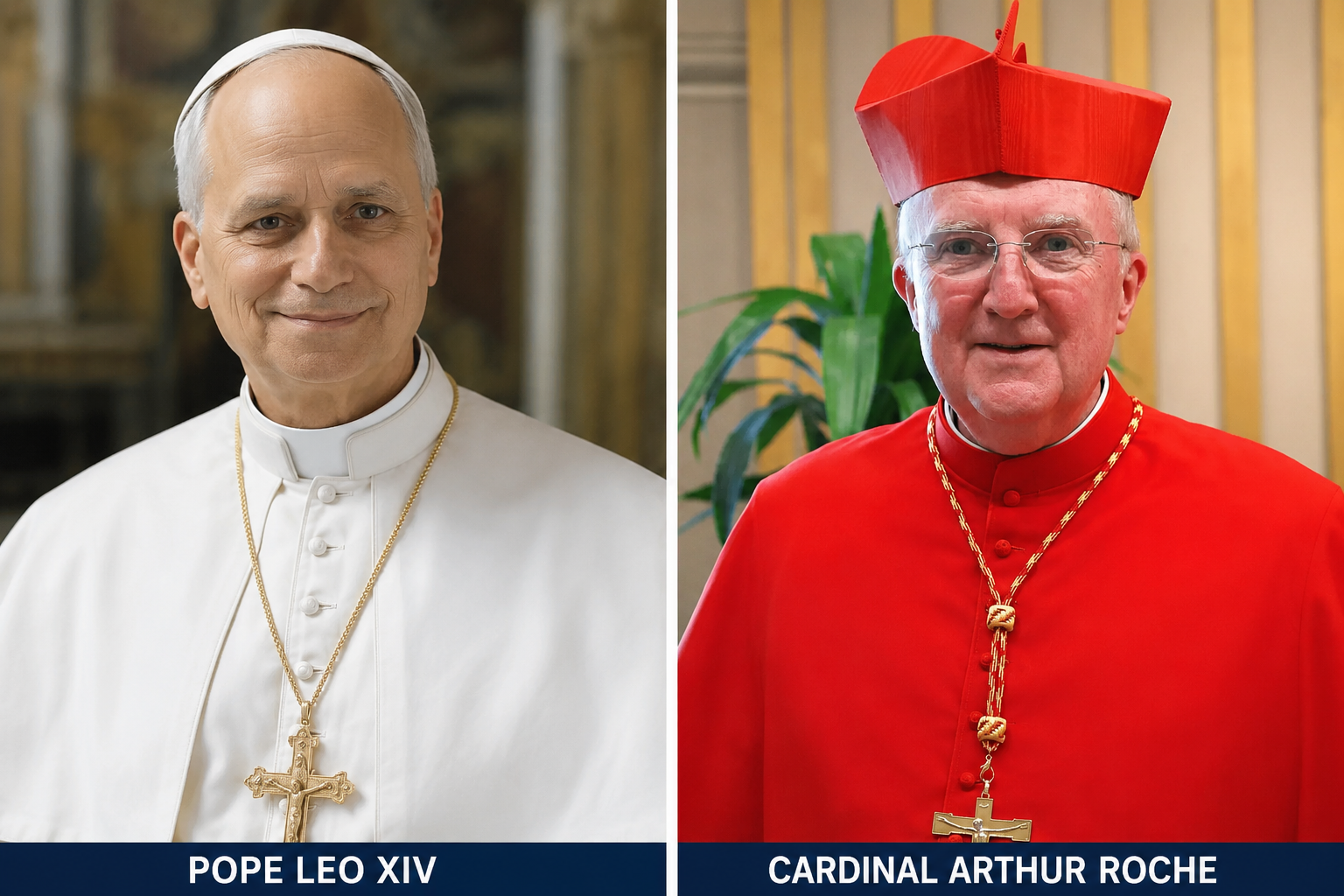
A report in a Spanish news outlet today has caused widespread speculation by suggesting that Pope Leo XIV is completely in sync with Cardinal Arthur Roche’s recent interview in The Tablet, in which the Prefect of the Dicastery for Divine Worship confidently declared that the Holy Father would neither reverse Traditionis Custodes nor return to Benedict XVI’s Summorum Pontificum (see my analysis here).
The latest report, published by La Razón, goes considerably further. Citing anonymous Vatican sources, it claims that the liturgical paper Cardinal Roche distributed to members of the College of Cardinals during January’s extraordinary consistory was not simply his own initiative but had been commissioned by Pope Leo himself, personally reviewed by the Pope, and approved without “changing a single comma.” If true, that would appear to place the Pope firmly behind Cardinal Roche’s theological interpretation of the post-conciliar liturgical reform and at odds with many of his recent personal initiatives. Needless to say, this has caused a great deal of dismay among those who consider Traditionis Custodes a total travesty (as I do) and nothing short of harmful to the faith.
The article however draws a very large conclusion from anonymous sourcing and it is important to distinguish between what has actually been established and what remains assertion. There is little doubt that Cardinal Roche’s document was prepared at the request of the Pope for distribution before the consistory. That much has been widely reported. It is also true that the document was circulated to the cardinals.
What has never been publicly confirmed by the Holy See, however, is that Pope Leo endorsed every argument contained within it, adopted Cardinal Roche’s conclusions as his own, or intended it to become the settled policy of his pontificate.
Indeed, the cardinals themselves reportedly declined to devote time to discussing the liturgical question during the consistory, meaning Roche’s paper was distributed but never became the subject of substantive debate.
Veteran Vatican journalist Diane Montagna has responded to the growing narrative with a measured analysis on her Substack. Rather than accepting the claims at face value, she notes that La Razón relies entirely upon unnamed Vatican sources while Pope Leo himself has remained publicly silent on the specific claims now being attributed to him. Montagna also places this latest report within the wider context of Cardinal Roche’s recent Tablet interview, in which the cardinal repeatedly spoke with remarkable confidence about the Pope’s intentions despite Leo never having publicly made such declarations himself. Her argument is not that the Spanish report must necessarily be false, rather, it is that anonymous briefings should not be confused with papal teaching.
Readers can find Diane Montagna’s full analysis here:
There are reasons for prudence: the timing is noteworthy. Within the space of a few days, two separate publications have advanced essentially the same message: that Cardinal Roche’s liturgical vision is, in reality, Pope Leo’s own vision. First came The Tablet interview, now comes La Razón, apparently strengthening that same narrative by appealing to anonymous Vatican sources. Whether this represents coordinated communication, officials independently briefing journalists, or simply accurate reporting of genuine conversations inside the Vatican is impossible to establish from the evidence presently available and it seems to me it will remain so until Pope Leo actually speaks definitively on this issue.
Equally, there are reports from Spanish commentators suggesting that La Razón itself has long taken a particular editorial line on ecclesiastical affairs and should therefore be read with appropriate caution. Those observations, however, concern the publication’s perceived editorial stance rather than constituting evidence that this particular report is inaccurate. They should therefore be treated as context, not proof.
I think it is essential to remember that Pope Leo’s own actions remain more nuanced and this is one reason many observers remain hesitant to conclude that Pope Leo has fully embraced Cardinal Roche’s programme. The facts are that the Pope’s own public actions have often appeared more nuanced than Roche’s rhetoric.
Since his election, Leo has repeatedly spoken about healing divisions within the Church rather than intensifying them. Earlier this year, through Cardinal Parolin, he encouraged the French bishops to find “concrete solutions” that would generously accommodate Catholics sincerely attached to the older liturgy while remaining faithful to the Second Vatican Council. Before the Écône consecrations, he also wrote to the Society of St Pius X in language that many interpreted as conciliatory rather than confrontational. Those gestures do not prove that Pope Leo intends to reverse Traditionis Custodes, nor do they prove that Cardinal Roche is mistaken. They simply illustrate why many Catholics believe it is premature to conclude that the Pope has definitively adopted Roche’s interpretation.
Ultimately, very little has actually changed. Cardinal Roche has stated what he believes Pope Leo intends to do. Anonymous Vatican sources have now reportedly reinforced that impression. But Pope Leo himself has still not personally addressed the future of Traditionis Custodes and it seems plausible that he won’t until Cardinal Roche leaves office.
Until the Pope does address this, We should be careful not to confuse anonymous briefings or even the confident assertions of senior curial officials with the Pope’s own settled teaching or decisions. The question is no longer whether Cardinal Roche believes he knows the Pope’s mind, the question is whether the Pope himself will eventually confirm that Cardinal Roche has spoken accurately on his behalf or whether, in time, events will tell a more complicated story. I think it’s probably the latter.