






THE SUPPORTERS CIRCLE
All the benefits of The Extraordinary Form, plus:
Custom giving level
This is more than a membership—it’s a commitment to advancing the mission and helping shape its future.
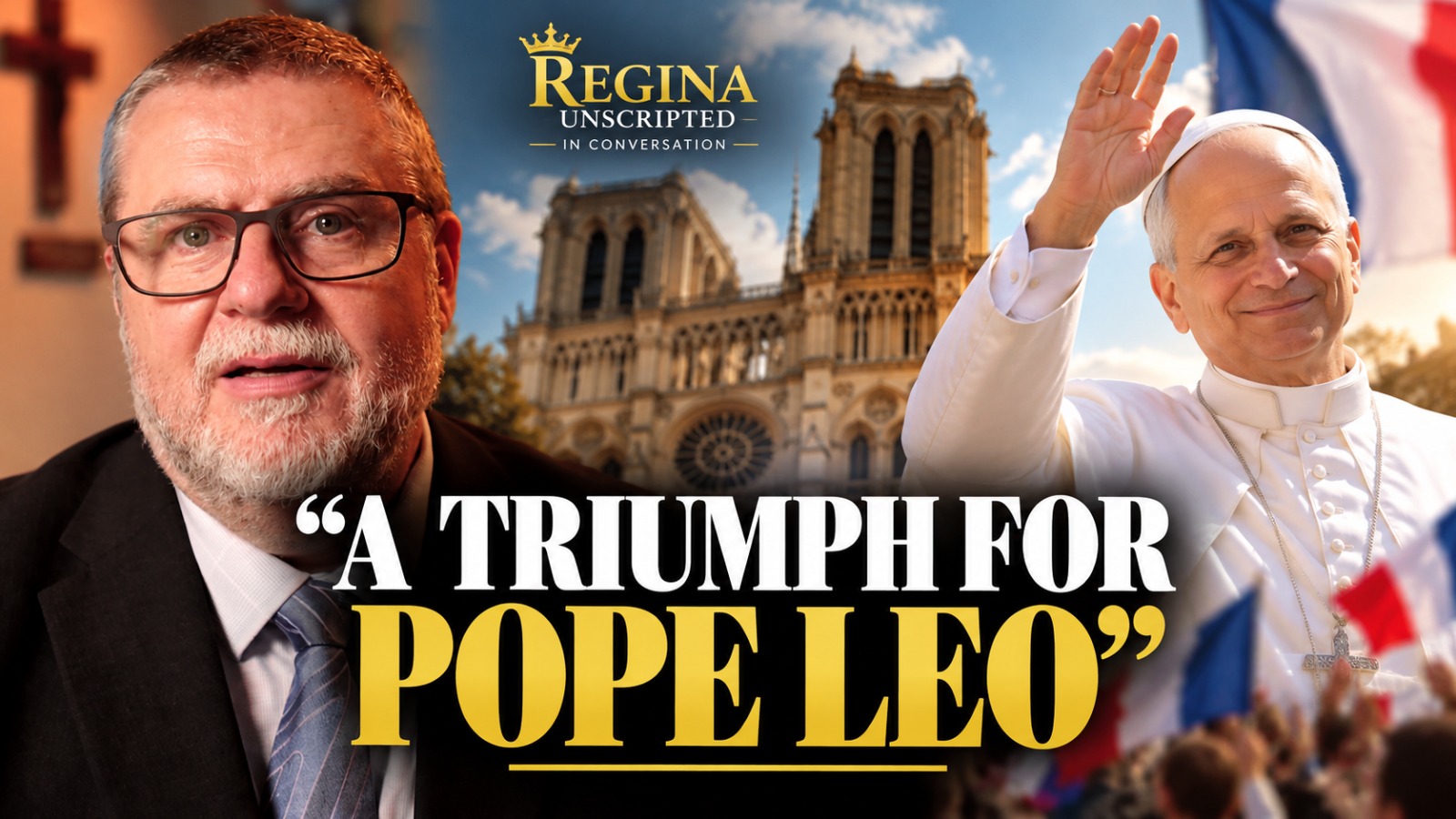
The most revealing moment of Pope Leo XIV’s visit to France came when the cheering stopped. At the Stade de France, the exuberant welcome gave way to silence before the Cross and the Holy Tunic of Argenteuil, as young people turned their attention towards the mystery that had brought them together: the suffering, death and Resurrection of Jesus Christ.
That transition helps us understand the joy and faithfulness on display throughout this Apostolic Journey. The crowds were welcoming the successor of St Peter to the eldest daughter of the Church. Their enthusiasm had a meaning far deeper than admiration for the man Robert Prevost.
Catholics recognise in the Pope a bond of communion reaching beyond their own parish, country and generation, back to the Apostles and to Christ himself. The affection surrounding a papal visit springs from that recognition. Peter has come to strengthen his brethren, and the faithful rejoice to receive him.
This does not require us to imagine that every papal judgement is beyond criticism, or that a pope’s personality should become the centre of Catholic life. The office has its purpose in Christ, whose flock the Pope is entrusted to shepherd. Its deepest significance becomes visible when the man who holds it directs our attention towards the Lord.
That is the thread I explore in this video, following Leo’s journey through Paris, Lourdes and Metz. Beneath the extraordinary public scenes runs a consistent invitation to recover the Christian understanding of the human person, to proclaim the Gospel with confidence and to recognise that France’s Catholic inheritance still makes a claim upon her present.
France’s title as the eldest daughter of the Church carries both a glorious history and a searching question. A nation that gave the world so many saints, missionaries, theologians and religious communities cannot exhaust its relationship with Christianity by preserving beautiful buildings. Cathedrals were built for worship, and the faith that raised them asks to be lived.
The young people praying in the stadium, the crowds gathering for Mass and the pilgrims at Lourdes offered moving evidence of that living faith. We should be careful about declaring a national revival on the strength of a papal visit, but we should be equally careful about explaining away the conviction, reverence and hope before our eyes.
For me, the scenes at Lourdes carried particular weight. It is where I met my wife, and a place woven into our family’s joys and sorrows. Seeing the successor of Peter kneel at the Grotto brought together the universal life of the Church and the intensely personal experience of bringing everything we carry before Our Lady.
There, too, the meaning of Christian dignity becomes wonderfully concrete. The sick and dependent have a place of honour, surrounded by people whose service bears witness to the preciousness of their lives.
The question after such a visit is how its joy will bear fruit: in prayer, sacramental life, vocations, faithful families and the courage to speak of Christ in ordinary conversation. The successor of Peter came to France to proclaim the Lord, and the most hopeful response was a people showing that they still wished to hear him.
Watch the video below as I reflect on the journey, its teaching and what this remarkable welcome might mean for France and for the wider Church.