










On the Magisterium, religious liberty, the spirit of Assisi, and the increasingly embarrassing business of converting people to Jesus Christ

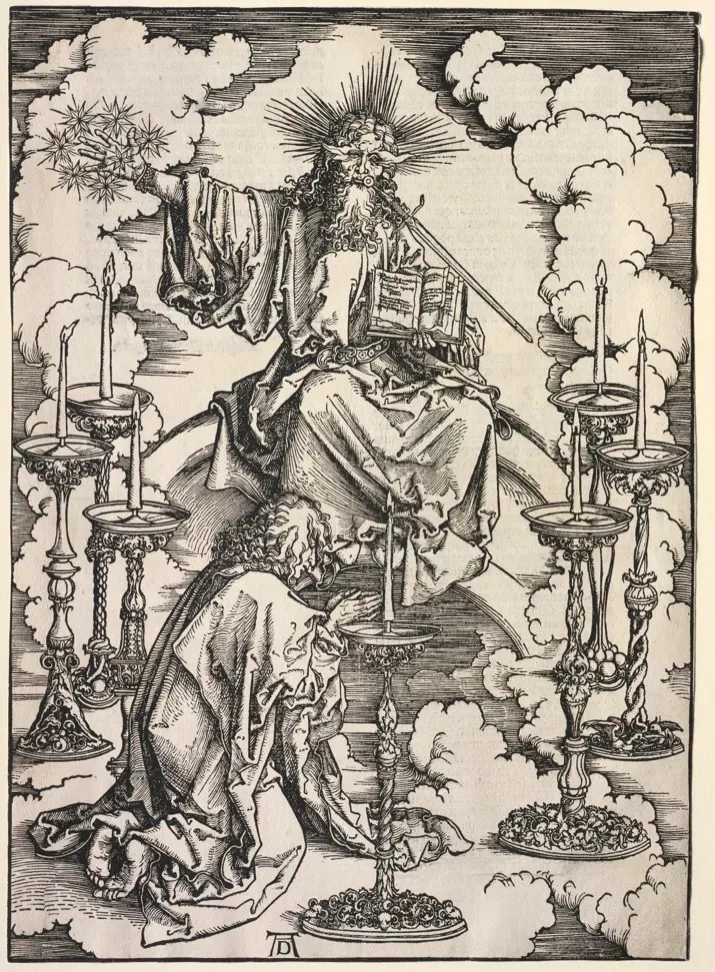
“Because Thou Art Lukewarm, I Will Begin to Vomit Thee Out of My Mouth.” — Apocalypse 3:16
The following article is by The Rev Professor STEPHEN MORGAN.
There is something peculiarly revealing about the spectacle of a Catholic bishop finding himself obliged to defend the proposition that the Catholic Church exists, among other things, to bring people to Jesus Christ. One might have supposed that this was among the less controversial assertions available to a successor of the Apostles. Apparently not.
Bishop Robert Barron’s recent criticism of Cardinal Jean-Paul Vesco, Archbishop of Algiers, has produced precisely this curious state of affairs. Cardinal Vesco’s remarks about fraternity, dialogue and conversion have prompted a controversy in which the objection to his apparent reluctance to seek conversions has itself been treated as the more serious ecclesiastical offence. The Great Commission, it seems, now requires a rather elaborate pastoral disclaimer.
Nor is the controversy confined to Algeria. Cardinal George Jacob Koovakad, Prefect of the Dicastery for Interreligious Dialogue, has recently visited England in connection with the fortieth anniversary of the interreligious gathering convened by John Paul II at Assisi in October 1986. His reflections upon the enduring significance of that event, and particularly upon its relationship to the Church’s Magisterium, raise questions which extend considerably beyond the propriety of interreligious dialogue.
At issue is not whether Catholics should respect those who profess other religions, nor whether the Church should cooperate with them in pursuit of peace and the common good. Both propositions are entirely consistent with Catholic doctrine—suggestions to the contrary are either utterly ill-informed or wilfully contrarian. The question rather is whether, in the decades since the Second Vatican Council, a carefully formulated teaching about the freedom of religious belief has been progressively transformed into an ecclesiastical reluctance to propose the truth of the Catholic faith at all.
There is an additional difficulty. The increasing tendency to describe favoured ecclesiastical initiatives as magisterial, without identifying either their precise doctrinal content or the authority with which that content is proposed, has made the faithful’s obligation of assent unnecessarily difficult to discern. Ward’s dictum “I should like a new Papal Bull every morning with my Times at breakfast” has, it seems, come true at last. The newest Doctor of the Church must weep. A vocabulary originally intended to distinguish different degrees of ecclesiastical teaching has become, in some quarters, a means of avoiding the distinctions altogether. This is not merely a theological inconvenience. It is a serious problem of ecclesial credibility.
I. The remarkable achievement of Dignitatis humanae
The Second Vatican Council’s Declaration on Religious Liberty, Dignitatis humanae, promulgated on 7 December 1965, deserves rather better treatment than it has generally received from either its most enthusiastic admirers or its most determined critics.
Its conciliar history was unusually contentious. In the penultimate vote on the complete text, on 19 November 1965, 249 Fathers voted non placet, against 1,954 placet. At promulgation the numbers had become 2,308 in favour and 70 against, with eight invalid votes. The final number of negative votes was the highest recorded for any document promulgated by the Council. Earlier stages of the drafting had generated substantial numbers of placet iuxta modum votes, and thousands of proposed amendments required consideration.
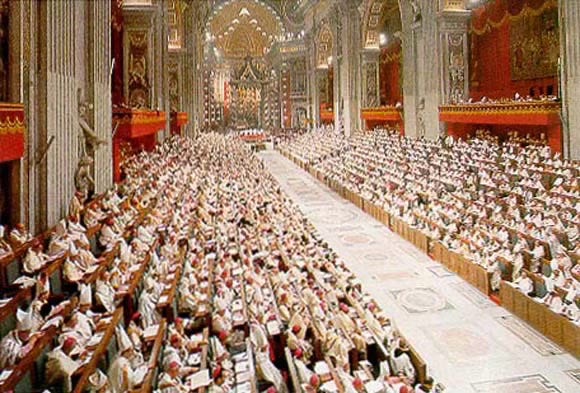
The difficulty was not lost upon the Council Fathers themselves. Bishop Émile-Joseph De Smedt of Bruges, the official relator of the Declaration, was obliged in his final explanation of the revised text on 19 November 1965 to negotiate what might almost be described as a contradiction in terms: the assertion of an objective and universal obligation to embrace religious truth alongside the recognition of a civil right to religious freedom possessed even by those whose religious convictions are objectively mistaken.
The distinction is logically defensible, but it is by no means self-explanatory. The Council was asserting that the human person possesses no moral right to reject religious truth as such, while nevertheless enjoying a genuine juridical right not to be coerced in religious matters, even when failing to fulfil the obligation to seek and embrace that truth. The right attaches to the dignity of the person, not to the truth of the religious proposition professed. But its exercise is itself subject to the requirements of just public order. This is the same legerdemain used to square the circle of the biblical prescription of the death penalty, and 2000 years of consistent magisterial action, consent and teaching in its favour with the Catechism of the Catholic Church’s, as amended, description of it inadmissibility on the grounds of the human dignity of the convict.
De Smedt’s explanation of the latter qualification introduces a further complication. In his oral remarks, he observed that the common good was relative to the cultural development of peoples and must be judged in relation to that development (he cannot, surely, have subscribed to some kind of doctrine of the inferiority of what appear to be relatively undeveloped cultures and races?). Yet the written relatio had treated the common good in its full extent as the norm for safeguarding and promoting religious liberty. The relationship between these formulations, and between the common good and the Declaration’s narrower language of just public order, has remained a matter of theological dispute.
There is, therefore, an important difference between asserting that the Council successfully distinguished moral obligation from juridical immunity and pretending that the resulting synthesis was so obvious that no reasonable Catholic could have found it difficult. The Council Fathers themselves plainly did not regard the matter as obvious. Had they done so, they might have saved themselves several years of controversy, repeated redrafting, and the remarkable number of qualified and negative votes which accompanied the Declaration’s passage, let alone the major pretext for suppurating wound to the body of the Church of the Lebvrist soi-disant, on/off, is it/isn’t it schism.
The achievement of Dignitatis humanae was precisely that it sought to hold together propositions which could easily be mistaken for mutually exclusive claims. Its reception required the same intellectual discipline that had informed its formulation. Instead, much post-conciliar rhetoric, devoid of the necessary subtlety, has simply discarded one side of the distinction. The freedom of the person has been retained; the objective obligation to embrace religious truth has been progressively obscured. The right not to be coerced has become, in practice, something approaching a right not to be persuaded. The Church’s obligation to propose the Gospel has been transformed into an obligation to ensure that the proposal causes no religious discomfort. One can scarcely imagine a more comprehensive misunderstanding of a declaration which expressly affirmed that religious freedom provides the conditions under which human beings may be invited to embrace the Christian faith. The paradox which De Smedt laboured to explain has not been resolved. It has merely been concealed by eliminating the proposition which made it difficult. That is not reception. It is selective amnesia.
These facts are worth recalling, not because they diminish the authority of the Declaration, but because they demonstrate the care with which the Council sought to formulate its teaching. The Fathers were addressing a genuine theological difficulty: how to articulate the Church’s perennial conviction concerning the objective claims of religious truth while recognising the dignity and freedom of the human person in the religious act. The result was a distinction of theological precision. Whether or not it was pastorally prudent may reasonably be judged according to the Gamaliel principle. Does the tree flourish or does it wither? YMMV, as my kids frequently type.

The Council did not declare that religious truth was a matter of personal preference. It did not suggest that the religions of the world were interchangeable expressions of a single spiritual reality. It did not rescind the Church’s obligation to proclaim the Gospel, nor did it abolish the obligation of every human person to seek religious truth and adhere to it once known. Indeed, the opening paragraph expressly preserves the traditional Catholic teaching concerning the moral duty of individuals and societies towards the true religion and the one Church of Christ. What the Declaration established was that the obligation to seek and embrace religious truth does not confer upon civil authorities, or upon other human agents, a right to coerce religious belief.
This is a distinction between the objective obligation of conscience and the juridical immunity from coercion necessary for its proper exercise. It is not a distinction between the possession of truth and the obligation to communicate it.
The Council’s teaching is therefore entirely compatible with the proposition that the Catholic Church possesses the fullness of the means of salvation, that Jesus Christ is the unique and universal Saviour, and that the Church has an obligation to invite all people to enter into communion with him. Indeed, without those propositions, much of the theological architecture of Dignitatis humanae becomes difficult to understand, let alone explain or defend.
Yet the Declaration has frequently been received as though it taught something quite different: that religious liberty requires Catholics to refrain from seeking the conversion of others; that to propose the Catholic faith as objectively true is to compromise the dignity of those who do not profess it; and that the highest expression of religious respect is to leave another person’s convictions substantially undisturbed. This is not the teaching of the Council. It is a caricature of that teaching, and a remarkably impoverished one, at that (I was going to write “laughable,“ were it not for the fact that it actually makes me want to weep).
There is a considerable difference between recognising that a Muslim must be free to profess Islam and suggesting that a Catholic must not wish him to become a Christian. The former is an implication of religious liberty. The latter is a repudiation of the missionary mandate. It is also one that neatly sidesteps the question of the responsibility of Christian rulers to promote both the common good of their people (i.e. salvation) and defend the truth.
The irony is that a declaration intended to protect the freedom of the act of faith has increasingly been invoked to discourage the invitation to make that act at all, whilst creating a de facto prohibition against acting or speaking in a manner that might create the conditions under which such a seemingly unnecessary act might even be contemplated.
One might reasonably ask whether Dignitatis humanae has, in any meaningful theological sense, been received.
II. Sixty years of missionary immobility
The question of reception acquires a particular urgency when considered alongside the demographic history of Catholicism since the Council.
The absolute growth of the Catholic population has been considerable. From approximately half a billion Catholics in the middle of the 1960s, the Church has grown to more than 1.4 billion today. The expansion of Catholicism in Africa has been especially striking, and it would be both historically inaccurate and ecclesiastically ungrateful to overlook it.
Nevertheless, the relevant comparison is not with the past but with the present, that is with the growth of the world’s population. In the mid-1960s, Catholics constituted approximately 17–18 per cent of humanity. Six decades later, the proportion remains in much the same range. Recent Vatican statistics place the Catholic share at approximately 17.8 per cent. Thus, despite an enormous expansion in the world’s population, and despite the Church’s extensive missionary institutions, and not overlooking a “Decade of Evangelisation” and an entire pontificate self-confessedly dedicated to making every Catholic a “missionary disciple,” the proportion of humanity professing the Catholic faith has remained remarkably stable.
This does not establish that Dignitatis humanae caused missionary stagnation. Such an argument would be statistically naïve and theologically irresponsible. Fertility, migration, secularisation, patterns of baptism, religious disaffiliation and the changing geographical distribution of Christianity all complicate the picture; collapse in Europe and the rest of the Global North; stasis in Latin America and Asia; enormous expansion in Africa.
Nor is the success of evangelisation reducible to numbers. The Church is not a multinational corporation, and the number of baptisms is not simply the ecclesiastical equivalent of quarterly sales. It would, however, be equally foolish to pretend that numbers are irrelevant. The Church is commanded to make disciples of all nations, and the entry of men and women into sacramental communion with Christ is not an accidental by-product of her mission. If, then, the Church’s proportionate presence among humanity has scarcely changed over sixty years, it is at least reasonable to inquire whether something has gone wrong with the way her missionary vocation has been understood and exercised.
One possible answer is that the Council’s teaching on religious liberty has been subjected to a sustained process of simplification, until the distinction between coercion and persuasion has become the distinction between unacceptable proselytising and acceptable conversation. The result is a Church which continues to speak incessantly about evangelisation while sometimes appearing embarrassed by its intended consequence. This is a rather curious missionary achievement: to have spent sixty years discussing the importance of proclaiming the Gospel while making remarkably little proportional progress in bringing the world to profess it.
III. The Magisterium and the miraculous elevation of Assisi
It is in this context that Cardinal Koovakad’s recent reflections upon the 1986 Assisi gathering become particularly interesting.
The gathering convened by John Paul II on 27 October 1986 was undoubtedly an event of considerable symbolic importance. It expressed the Pope’s determination to enlist religious communities in the pursuit of peace and to demonstrate that religious conviction need not be a source of violence. It was not, however, an ecumenical council, a doctrinal definition or a solemn exercise of papal infallibility.
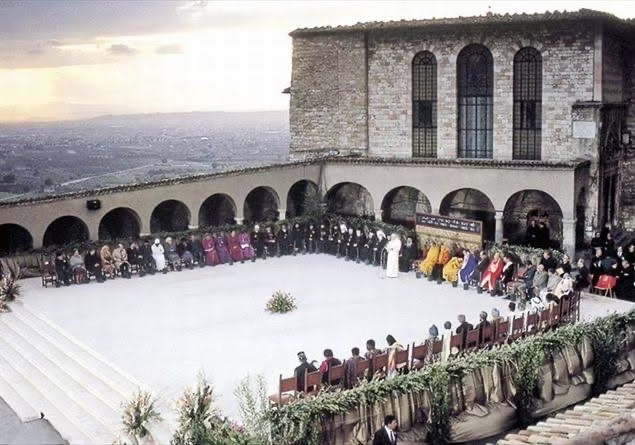
Cardinal Kookvakad has reportedly spoken of the event as having entered the Church’s ordinary Magisterium through its subsequent reception in papal teaching. The formulation requires careful examination. To say that Assisi has been incorporated into the Church’s ordinary teaching is not necessarily to say that it forms part of her infallible teaching. Nevertheless, unless the distinction is expressly maintained, the language invites precisely the confusion which Catholic theology has historically taken considerable trouble to avoid.
There is also the rather elementary question of what, exactly, is supposed to have entered the Magisterium. Is it the fact that the gathering occurred? The decision to convene it? The programme and agenda? The arrangements made for the participants’ respective religious observances? The account subsequently published in L’Osservatore Romano? The Pope’s addresses? The theological assumptions which informed the occasion? Or perhaps the menu at the lunch buffet?
The last suggestion is deliberately absurd. Unfortunately, it is only slightly more absurd than the suggestion that an historical event, considered without further specification, can itself constitute a doctrinal teaching. Even allowing for the different way in which theology is sometimes undertaken in the eastern Catholic churches, that such a suggestion should fall from the lips of a cardinal of the Holy Roman Church, and the one specifically entrusted with questions of interreligious dialogue, is scarcely explicable.
An event may embody a principle. It may illustrate a doctrine. It may become an important point of reference in the development of ecclesiastical practice or it may give a counter witness to such things, but an event is not itself a doctrinal proposition. It is propositions, not occasions, which are the proper objects of magisterial teaching. The difficulty becomes especially apparent when the language of infallibility enters the discussion, or even when it attaches itself, invited or not, explicitly or implicitly, to the word “Magisterium.”
The First Vatican Council’s Pastor aeternus defined the conditions under which the Roman Pontiff teaches infallibly: when, exercising his office as supreme pastor and teacher of all Christians, he defines a doctrine concerning faith or morals to be held by the whole Church. The Second Vatican Council’s Lumen gentium, in paragraph 25, reaffirmed that teaching and explained the infallibility of the episcopal college, including the ordinary and universal Magisterium. Neither Council suggested that the infallibility of the Church extended automatically to papal initiatives, public ceremonies, interreligious gatherings or the retrospective celebration of events which subsequent ecclesiastical authorities consider especially significant.
If Assisi is said to belong to the ordinary Magisterium, therefore, the question is not simply whether a Pope has spoken favourably of it. The question is what identifiable doctrine has been taught, by what authority, with what degree of definitiveness, and consequently requiring what response from the faithful.
This is not a pedantic exercise in ecclesiastical classification. It is the necessary condition for understanding what the Church requires Catholics to believe. In fact, it is more than this, it is a question of revealed truth and the objective claim that makes upon all people, Catholic or not, and upon which the eternal salvation depends.
IV. Infallible, definitive and authentic: distinctions which actually matter
Catholic theology distinguishes between several forms and degrees of magisterial teaching. The distinction is neither optional nor merely academic.
First, there are doctrines proposed as divinely revealed, to be believed with divine and Catholic faith. Such teachings may be proposed by solemn definition or by the ordinary and universal Magisterium. Their denial, when obstinate and undertaken with the relevant conditions satisfied, constitutes heresy.
Secondly, there are doctrines definitively proposed as necessary for faithfully preserving and expounding the deposit of faith, even where they are not themselves proposed as formally revealed. These require firm and definitive assent. They too are taught infallibly, although the theological character of the required assent differs from that owed to truths proposed as divinely revealed.
Third, there are teachings of the authentic Magisterium which are not proposed definitively. These require what Lumen gentium 25 and canon 752 describe as religious submission of intellect and will.
The distinction between these categories was carefully articulated in the Congregation for the Doctrine of the Faith’s 1998 Doctrinal Commentary on the concluding formula of the Professio fidei. It follows, therefore, that the authentic Magisterium is not synonymous with the infallible Magisterium. Nor does the fact that a teaching is not infallible mean that Catholics are free simply to disregard it. Religious submission is a genuine ecclesial obligation. It requires a serious disposition of receptivity, respect and an honest effort to understand the teaching in continuity with the Church’s doctrinal inheritance. But neither does it require the faithful to treat every prudential judgement, pastoral preference, disciplinary decision or rhetorical formulation as though it were irreformable. Indeed, the obligation of religious submission presupposes that one can identify the teaching to which submission is owed. One cannot assent to an undefined proposition.
This point seems almost embarrassingly obvious. Yet it is increasingly neglected.
If Cardinal Koovakad means that the Church’s commitment to interreligious cooperation and the pursuit of peace forms part of her authentic teaching, there is no particular difficulty. If he means that successive Popes have encouraged the approach exemplified by Assisi, that too is readily intelligible. But if the suggestion is that Assisi as an historical occurrence has acquired some special doctrinal authority, it becomes necessary to identify the proposition which has acquired that authority. And if the claim extends to infallibility, the conditions of Pastor aeternus and Lumen gentium must be demonstrated, not merely presumed. Otherwise, we are left with the extraordinary prospect of a Church which has spent centuries carefully defining the conditions of infallibility, only to discover that those conditions can be satisfied retrospectively by the favourable commemoration of a papal gathering. Furthermore, the suggestion that questioning the prudential wisdom of the event itself constitutes an act revealing a schismatic mindset is, ironically, amounts to a form of religious coercion that we might call “gaslighting.“
One suspects that neither Pius IX nor Paul VI would have found this an especially persuasive account of the Church’s teaching office.
V. The obligation of assent in an age of magisterial inflation
The problem is compounded by the changing literary character of ecclesiastical documents. Earlier doctrinal pronouncements frequently employed a comparatively formal and juridically precise style. They identified propositions, distinguished categories, defined terms and indicated the authority with which a judgement was being made. Contemporary papal and curial documents have increasingly adopted a more expansive, conversational and occasionally polemical style. They combine doctrinal teaching with pastoral exhortation, prudential judgements, social commentary, historical interpretation and, sometimes, remarkably sharp assessments of those who disagree with their authors.
There is no theological requirement that every ecclesiastical document should resemble a scholastic disputation. The Church must communicate in ways appropriate to different audiences and circumstances. Nevertheless, the distinction between doctrinal authority and literary style cannot simply be ignored. A proposition does not become more authoritative because it is expressed more vehemently or expansively. Nor does an unusually fierce denunciation of those who disagree establish that the judgement being defended belongs to the infallible Magisterium. Indeed, some recent ecclesiastical documents have displayed an unfortunate tendency to combine doctrinal imprecision with rhetorical ferocity. The result is an ecclesiastical atmosphere in which the degree of authority attached to a statement can appear inversely proportional to the clarity with which its doctrinal content is identified.
The faithful are consequently presented with a peculiar difficulty. They are rightly instructed to receive the authentic Magisterium with religious submission, but they are not always told which propositions within a lengthy document constitute authentic doctrinal teaching, which are applications of that teaching, which are prudential assessments, and which are simply the personal judgements of the author.
This is not a satisfactory way to exercise the Church’s teaching office, nor is it just.
The problem became especially apparent during the pontificate of Francis. Documents such as Amoris laetitia, Fiducia supplicans and Traditionis custodes generated controversies not merely because their contents were disputed, but because their precise doctrinal or disciplinary status, their relationship to previous teaching, and the obligations they imposed were not always expressed with the clarity their subjects required.
These documents are not interchangeable nor is their status. Amoris laetitia is a post-synodal apostolic exhortation, Fiducia supplicans a declaration of the Dicastery for the Doctrine of the Faith approved by the Pope, and Traditionis custodes a legislative act. Their authority, subject matter and implications differ accordingly. To confuse them would be to reproduce the very imprecision under criticism. Yet the controversies surrounding them demonstrate the practical importance of distinguishing between doctrine, discipline, pastoral application and prudential judgement.
The ferocity with which some interpretations have been defended has not always been matched by an equivalent precision in explaining what Catholics are actually obliged to accept. One might have hoped that a pontificate so devoted to dialogue would have displayed a rather greater enthusiasm for it when the interlocutors were Catholics asking serious theological questions instead of always calling into question the bona fides of those asking the questions. The issue is not whether the faithful may reject the Magisterium whenever they find its teaching inconvenient. They may not. The issue is whether ecclesiastical authority fulfils its own responsibility when it demands submission without adequately specifying the object, nature and degree of that submission.
The Congregation for the Doctrine of the Faith’s instruction Donum veritatis recognised that difficulties may arise in relation to non-definitive teachings. It did not equate every such difficulty with dissent, nor did it abolish the theologian’s obligation to pursue truth responsibly within the communion of the Church. It is therefore perfectly possible to maintain a serious commitment to the Magisterium while asking whether a particular formulation adequately expresses the Church’s settled doctrine or manifesting to one’s legitimate pastors concerns about the prudential wisdom of this or that act or failure to do so. Indeed, in some circumstances such questioning may be an expression of fidelity rather than its opposite.
Magisterial authority is not strengthened by exaggerating its scope. It is weakened when Catholics are encouraged to suppose that every ecclesiastical statement carries the same obligation of assent.
The resulting confusion is strikingly similar to that surrounding Dignitatis humanae: a carefully differentiated theological teaching is replaced by a simplified formula, and the simplification is then defended as though it were the doctrine itself.
VI. Attraction, persuasion and the curious disappearance of conversion
Mark Lambert’s recent essay, When Did Conversion Become a Dirty Word?, identifies a closely related difficulty in the Church’s understanding of evangelisation. Lambert is right to distinguish between Benedict XVI’s teaching concerning evangelisation through attraction and the subsequent use of that language in ways which have sometimes obscured the legitimate place of persuasion.
At Aparecida in 2007, Benedict XVI explained that the Church grows through attraction. But attraction was not proposed as an alternative to missionary proclamation. It described the power of Christ’s love, manifested supremely in the Cross, which draws human beings towards him. It’s scriptural model is set out in 1 Peter 3:15, “…being ready always to satisfy everyone that asketh you a reason of that hope which is in you.” This injunction presupposes living in a way that manifests that hope (attraction), openness to being asked about it (dialogue), and being able to offer that explanation (proclamation).
The same year, the Congregation for the Doctrine of the Faith issued its Doctrinal Note on Some Aspects of Evangelization, approved by Benedict XVI. The document expressly rejected the suggestion that respect for religious liberty renders attempts to persuade another person to embrace the Christian faith illegitimate. It affirmed the freedom of the act of faith while insisting upon the Church’s obligation to proclaim the Gospel.
This is entirely coherent.
The fact that conversion is the work of grace does not imply that human persuasion is irrelevant. Grace does not render argument, explanation, invitation or witness unnecessary. It enables them to become instruments of divine action. The Apostle Paul did not consider the work of the Holy Spirit incompatible with reasoned argument. Indeed, the Acts of the Apostles repeatedly describes him reasoning, explaining and persuading.
The difficulty with some of Pope Francis’s recurrent warnings against proselytism was not that they explicitly repudiated this teaching. As Lambert properly acknowledges, Evangelii gaudium contains substantial affirmations of evangelisation, including the legitimate place of apologetics and explicit proclamation. The problem was that Francis’s public rhetoric did not always preserve the distinction between improper methods of seeking conversion and the legitimate desire that another person should freely embrace the Christian faith.
The expression that the Church grows through attraction rather than proselytism can be perfectly orthodox, provided that proselytism is understood to mean coercive, manipulative or otherwise improper attempts to secure religious adherence. It should also be remembered that this connotation being attached to the word proselytism is a modern phenomenon. The noun προσήλυτος literally means ‘one who has come over’ or ‘one who has approached’. It derives from the verb προσέρχομαι (proserchomai), ‘to approach’ or ‘to come towards’. For example, Matthew 23:15 records Christ’s criticism of the scribes and Pharisees, “Woe to you scribes and Pharisees, hypocrites; because you go round about the sea and the land to make one proselyte…”
The Greek reads: ποιῆσαι ἕνα προσήλυτον, that is, ‘to make one proselyte.’ neither the original Greek nor the Vulgate Latin word for a proselyte necessarily implies coercion, manipulation or improper inducement. This matters for contemporary Catholic discussions distinguishing evangelisation from proselytism. The modern pejorative meaning of proselytism cannot simply be read back into Matthew 23:15. Indeed, Christ’s criticism in that passage concerns the conduct and spiritual influence of the Pharisees, rather than establishing that seeking converts is inherently objectionable. Consequently, any theological argument that treats proselytism as intrinsically opposed to evangelisation needs to establish that distinction on theological and moral grounds.
But when proselytism is left undefined, and when warnings against it are repeatedly juxtaposed with expressions of suspicion towards persuasion, the result is predictable and the distinction, far from being made, is entirely undermined. Catholics begin to suspect that seeking another person’s conversion is itself somehow improper, with predictable consequences.
This is not a necessary consequence of Francis’s formal teaching. It is, however, an understandable consequence of rhetoric which repeatedly required theological qualification in order to avoid precisely that interpretation. Nor is the problem resolved by insisting that the Pope must have intended something orthodox. One may readily grant that possibility without being accused of being a Pollyanna, and to reflexively conclude that the opposite is true is a deeply un-Catholic, one might even say anti-Catholic, predisposition. The question is whether his words communicated that intention with sufficient clarity and to pose it is not to reveal a schematic mindset, pace Cardinal Kookvakad, but a real and sincere concern for the Great Commission.
An important distinction which must constantly be reconstructed by sympathetic interpreters has not been especially well communicated and when the distinction concerns the Church’s fundamental missionary vocation, the consequences are hardly trivial.
VII. Cardinal Vesco, Bishop Barron and the theological limits of fraternity
The controversy surrounding Cardinal Jean-Paul Vesco provides a particularly illuminating example of these vexed issues.
Vesco’s position deserves to be considered within the circumstances of his adopted Algeria, where the Catholic Church constitutes a very small minority and where imprudent public interventions may expose Christians, converts and those contemplating conversion to genuine danger. The witness of the Trappist monks of Tibhirine, murdered in 1996, and that of Bishop Pierre Claverie, killed in the same year, demonstrates the profound Christian significance of solidarity, friendship and fidelity within a predominantly Muslim society. No serious Catholic should treat the vulnerability of Algerian Christians as an incidental consideration. Nevertheless, pastoral prudence and theological principle are not the same thing.
A bishop may properly judge that particular methods of evangelisation would be reckless in his circumstances. He may emphasise the importance of friendship, service, prayer and the patient witness of Christian lives. He may rightly insist that no relationship should be made conditional upon religious conversion. None of this requires him to abandon the hope that his Muslim neighbours might freely come to believe in Jesus Christ and seek baptism. This distinction is elementary, but apparently increasingly elusive.
The controversy was complicated by the fact that a sentence attributed to Vesco in Bishop Barron’s intervention was, according to CathoBel, a journalistic summary rather than a direct quotation. That correction matters and ought to be acknowledged. Perhaps it reveals more about the theological disposition of CathoBel, rather than of Cardinal Vesco, but either way, it does not dispose of the theological question raised by the Cardinal’s reported explanation of proselytism as poisonous because it involves considering another person’s religion false. If that is indeed the argument, the difficulty is substantial.
Christianity and Islam make incompatible claims about Jesus Christ. The former professes him to be the incarnate Son of God, crucified and risen for the salvation of the world. The latter rejects his divinity and does not accept the Christian account of his death and resurrection. Both sets of propositions cannot be true in the same sense. To recognise this is not poisonous, is not to demean Muslims, is nor to deny their sincerity nor yet to call in to question the genuine moral and spiritual goods present in their religious lives. It is simply to acknowledge that religious beliefs possess intelligible content.
The Second Vatican Council’s Nostra aetate recognised what is true and holy in other religions while explicitly reaffirming the Church’s obligation to proclaim Christ. Similarly, the Congregation for the Doctrine of the Faith’s Dominus Iesus, issued in 2000, reaffirmed the definitive and complete character of revelation in Jesus Christ. Neither document requires Catholics to pretend that doctrinal contradictions are merely alternative perspectives upon an undifferentiated religious truth. Indeed, genuine dialogue becomes impossible if participants are forbidden to acknowledge the convictions which distinguish them.
A Muslim must be free to explain why he believes Christianity to be mistaken. A Catholic must possess the corresponding freedom to explain why he believes Islam to be mistaken. Neither action is poisonous: on the contrary, each action is a necessary part of any honest and meaningful dialogue. If either is prohibited from doing so, what remains is not dialogue but a carefully supervised exchange of agreeable sentiments.
Bishop Barron’s insistence that the Church exists to bring people to Christ is therefore not an eccentric theological innovation. It is an entirely conventional expression of Catholic missionary doctrine. One may question the prudence of particular interventions without questioning the doctrine they defend. That distinction appears to have escaped some of his more enthusiastic critics.
VIII. The social-media tribunal of the new orthodoxy
The responses associated with Michael Sean Winters and Fr Jeremy Zipple illustrate a wider difficulty in contemporary Catholic argument. Their criticism, as represented by their social media interventions, places considerable emphasis upon the vulnerability of Algerian Christians and the dangers of imposing an abstract missionary programme upon a Church living in circumstances very different from those of the United States. There is a serious argument here, and it deserves to be taken seriously. But it is an argument about prudence, not about the theological legitimacy of conversion and it is one which proceeds with an implied (and subsequently explicit) questioning of Bishop Barron’s good name. It is the supreme irony of the thing that it is Winters and Zipple, staunch critics of the modus operandi of the current American President, who use the very methods of his that they frequently decry, to traduce a Bishop whose interactions with the President they find so objectionable. This particular extreme form of TDS (”Trump Derangement Syndrome”) might require a further definition of the verb ‘to trump’ in the next edition of the Oxford English Dictionary.
Let me be quite clear about my argument here: to invoke Algeria’s circumstances as a reason for caution is entirely reasonable, to employ those circumstances as though they invalidated the Church’s obligation to seek the conversion of souls is another matter. The latter argument would be laughable, were it not for the regrettable social-media influence of those advancing it. The comedy lies in the disproportion between the theological proposition under discussion and the indignation apparently provoked by its restatement. Bishop Barron has not proposed a revival of forced conversions, nor suggested that Christians in Algeria should recklessly endanger themselves or their neighbours. He has defended the proposition that bringing people to Jesus Christ belongs to the Church’s essential mission. Yet the contemporary ecclesiastical commentariat has developed a remarkable capacity to transform the restatement of settled Catholic doctrine into an occasion for suspicion, while treating increasingly adventurous reinterpretations of that doctrine as evidence of pastoral sophistication.
The procedure is familiar enough. A bishop articulates a traditional Catholic proposition. His critics respond not by demonstrating that the proposition is false, but by suggesting that its articulation is insensitive, divisive or insufficiently attentive to context. The argument then moves from the truth of the proposition to the alleged deficiencies of the person who has expressed it.
It is a convenient method, since the theological question can be avoided almost indefinitely, which, given the manifested theological shortcomings of the proponents of these social media witch hunts, is just as well for them. One might want call such exchanges dialogue, although the dialogue seems to become distinctly less welcome when someone introduces a proposition requiring an answer.
The problem is not that Winters or Zipple should be denied the right to criticise a bishop. On the contrary, the freedom to offer reasoned criticism is essential to serious theological discussion. The problem arises when appeals to pastoral sensitivity are made to carry doctrinal conclusions which they cannot sustain. The precarious situation of Catholics in Algeria is a compelling reason to exercise prudence, particularly in Algeria. It is not a theological demonstration that conversion has ceased to be an objective of evangelisation and the suggestion that a bishop who restates the Great Commission has thereby failed to understand Christian fraternity is an extraordinary inversion of the Church’s missionary tradition. The appropriate response is not to question the sincerity of those making such arguments. It is to insist that they answer the theological question rather than continually changing the subject, that or, for want of charity, simply to hold them up to the ridicule their commentary invites.
IX. Reception, continuity and the authority of the Council
The common thread running through these controversies is the failure to distinguish between a doctrine and the interpretation subsequently imposed upon it. Dignitatis humanae carefully distinguishes freedom from coercion from freedom from the claims of religious truth. Nostra aetate acknowledges truth and holiness in other religions without compromising the unique salvific significance of Jesus Christ. Ad gentes expressly affirms the Church’s missionary vocation and the obligation to proclaim the Gospel. Lumen gentium distinguishes the different modes of magisterial teaching and the corresponding obligations of assent.
Yet each of these distinctions has, at various times, been obscured by appeals to an alleged “spirit” of the Council which seems remarkably reluctant to submit itself to the Council’s actual texts. In his closing speech to the Council in December 1965, Pope Saint Paul VI for saw quite clearly that this might well happen and warned the Council Fathers that, if anyone were to look for the “spirit of the council,’ they should look at the texts of the conciliar documents themselves. This is why Benedict XVI’s hermeneutic of reform in continuity with the one subject Church remains indispensable. The Council must be understood as an authoritative act of the Church’s teaching office, situated within the continuous life of the Church and interpreted in accordance with the integrity of the faith she has received. Its teaching cannot legitimately be invoked to justify conclusions which contradict its own express affirmations. Nor does fidelity to the Council require Catholics to accept every subsequent theological interpretation, pastoral experiment or ecclesiastical fashion which claims to derive from it. Indeed, the reception of a council necessarily involves the Church’s continuing effort to understand, articulate and apply its teaching. Reception is not completed by institutional repetition or by the proliferation of commemorative conferences. It is accomplished when the Council’s doctrine becomes intelligible and fruitful within the Church’s life. By this standard, the reception of Dignitatis humanae remains incomplete.
The Declaration’s central achievement was to defend the freedom of the religious act without diminishing the obligation to seek and embrace truth. Yet much contemporary ecclesiastical discourse has retained the language of freedom while neglecting the language of obligation. It has retained the commitment to dialogue while becoming increasingly hesitant about proclamation. It has retained the vocabulary of evangelisation while sometimes appearing uncomfortable with conversion and it has invoked the authority of the Magisterium while becoming progressively less precise about what that authority actually requires Catholics to believe. These are not unrelated developments. They reflect a common failure to preserve distinctions upon which Catholic doctrine depends.
X. Neither hot nor cold
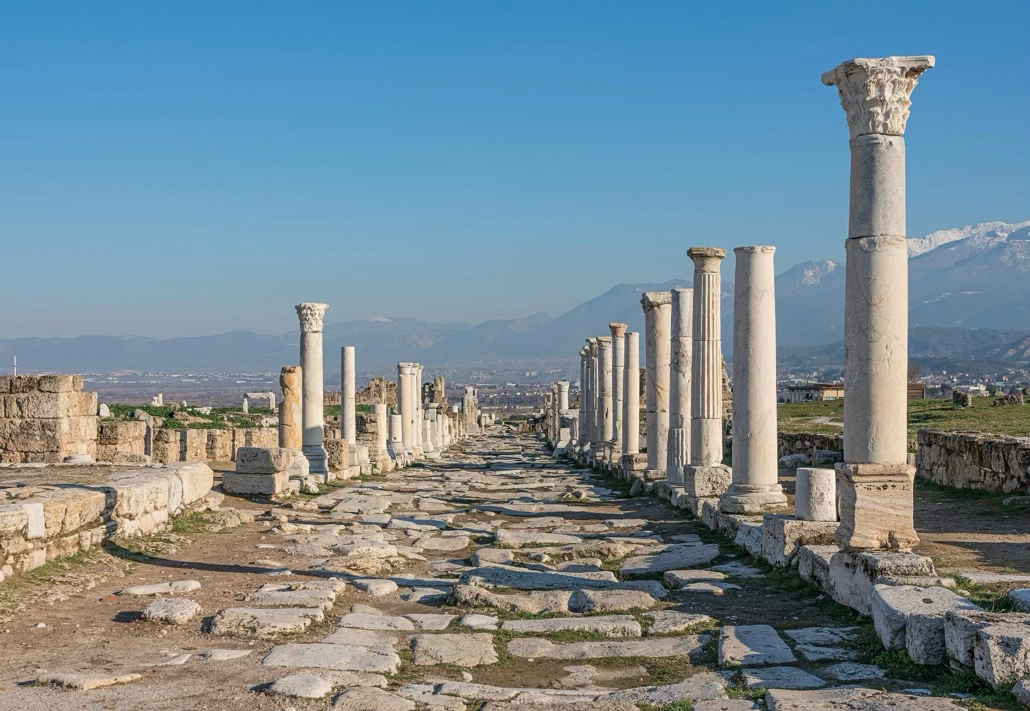
The warning addressed to the Church of Laodicea in the Book of the Apocalypse of St John is an uncomfortable one. The lukewarm are not condemned because they have failed to master the finer points of interreligious diplomacy. They are condemned because they have become complacent, self-satisfied and indifferent. The imagery is deliberately severe. God does not congratulate the lukewarm upon their moderation. He threatens to reject them.
There is, of course, no warrant here for religious aggression, discourtesy or the reckless endangerment of others. Christian zeal is not measured by the volume of one’s denunciations, still less by one’s capacity to provoke controversy. But neither is charity synonymous with the avoidance of disagreement. Still less to call into question the character and good faith of those with whom one disagrees, better load producing their motors and character in social media or gaslighting them in public statements.
To believe that Jesus Christ is the universal Saviour, and yet to regard the desire that others should come to know him as an embarrassment, is not a particularly coherent form of Christian charity. Nor is it an especially persuasive understanding of fraternity. The Church does not evangelise because Catholics are morally superior to those who profess other religions. She evangelises because she believes that the salvation offered in Jesus Christ is a gift intended for all humanity. That conviction is entirely compatible with respect for conscience, freedom from coercion, recognition of genuine truth and holiness outside visible Catholic communion, and cooperation with others for the common good. Indeed, it provides the theological foundation for a form of dialogue which is both genuinely charitable and intellectually honest.
What it cannot accommodate is the suggestion that respect for another person’s freedom requires indifference towards his religious convictions, or that the desire for his conversion is inherently incompatible with friendship. Still less can it find room for a conception of the Magisterium in which the authority of a proposition is established by the vehemence with which it is defended, or by the retrospective elevation of a favoured ecclesiastical occasion into something approaching a doctrinal definition. The Church’s teaching office exists to safeguard and communicate the deposit of faith. It does not exist to confer an aura of infallibility upon every ecclesiastical initiative which happens to enjoy contemporary approval. Precision is therefore not the enemy of pastoral sensitivity. It is one of its necessary conditions. The faithful are entitled to know what the Church teaches, what she proposes definitively, what she teaches authoritatively without defining, what she requires by way of discipline, and what remains a matter of prudential judgement.
They are equally entitled to expect that the Church’s ministers will distinguish between the freedom of the act of faith and the abandonment of the obligation to propose that faith. The difficulty with so much contemporary ecclesiastical rhetoric is not that it takes the Second Vatican Council too seriously. It is that it doesn’t take it seriously enough, frequently taking half-understood slogans that caricature what the Council taught more seriously than its texts.
Perhaps the fortieth anniversary of Assisi might therefore provide an occasion for something rather more useful than another celebration of the spirit of dialogue. It might encourage a renewed reading of Dignitatis humanae, Ad gentes, Nostra aetate and Lumen gentium, together with a more careful appreciation of the distinctions upon which their teaching depends. It might also encourage those who invoke the Magisterium to identify rather more precisely what they believe has been taught, by whom, and with what authority. And it might remind Catholics that the Church’s mission is not exhausted by making the world a more agreeable place in which everyone may remain exactly as he is.
The Church exists to proclaim Jesus Christ, crucified and risen, and to invite all humanity into communion with him. The invitation must be free. It must be charitable. It must respect the dignity and conscience of those to whom it is addressed. But it must still be made. Otherwise, one is left with a rather remarkable ecclesiastical enterprise: a Church which possesses the fullness of the means of salvation but is increasingly reluctant to suggest that anybody else might benefit from them.
It is difficult to imagine a more perfect formula for religious lukewarmness, and the Apocalypse is not especially encouraging about its prospects. Not hot. Not cold. Merely impeccably polite to those outside the Church she active seeks not to convert and scurrilously disrespectful of the human dignity of those within her visible Communion who dare to question this approach. Has anyone here heard whether the Church of Laodicea thrives? No? I thought not.
The Rev Professor STEPHEN MORGAN has been Rector (i.e. Vice-Chancellor or President) of the University of Saint Joseph Macao from 2020 until 2026 where he was a Professor of Theology and Church History. The University of Saint Joseph is the only comprehensive Catholic university in China.
Originally serving in the Royal Navy, he later worked in taxation, banking and private equity in Hong Kong and the City of London. He was Oeconomus of the Diocese of Portsmouth from 2004 until 2018 and is a Permanent Deacon of that diocese.
He was a member of the academic staff of the Maryvale Institute of Higher Religious Sciences from 2011 until 2025.
In 2022 he was elected Vice President of the International Federation of Catholic Universities. He is also President of the Executive Secretariat of the Association of South East Asian Catholic Colleges and Universities.
He is a Fellow of the Royal Historical Society, the Royal Society of Arts and the Royal Asiatic Society.
He is amongst the foremost Newman scholars in the world today. His outstanding book on Newman, “John Henry Newman and the Development of Doctrine“, is available in paperback from Catholic University of America Press and Amazon in the UK and the US. I know just how invaluable this work is. I have read it. Stephen is my friend.



Stay informed. Stay inspired.
Get the best of Regina Unscripted delivered to your inbox each week.